Experience the 2022 jātar to this pilgrimage site in Chamba and read some tips on how to get there next year.
What, or who, is Khundī Mātā?
Khundī Mātā is a lake, mountain, and shrine dedicated to Māralī, a local form of the goddess Kālī. Hence, she is also known as Khundī Māralī Mātā. The name “Khundī” likely comes from the Gaddī word “khund,” meaning a pole for tethering a cow.
Khundī Mātā Lake sits at 3,750 meters (12,300 feet) above sea level. The four routes there were established by the Gaddī shepherds who still lead their flocks to summer pasture in the emerald meadows surrounding the lake.
It is a sacred area for Gaddīs as well as for some people from the nearby Tissa Valley.
Where is Khundī Mātā?
The broad, shimmering waters of Khundī Mātā are nestled amidst the Himalayan peaks of the Pir Panjal mountain range, in the middle of the crescent-shaped Chambā District, Himachal Pradesh. The closest road ends at the village Chanju, in Churah Tehsil, off the main road to Tissa.
When do people go on the Khundī Mātā Pilgrimage?
Her main jātar (pilgrimage) takes place on the first, or “big” (jyeṭh), Tuesday during the dark half of Bhadrapāda, which will usually fall in the Gregorian month of August. This is a few weeks before the much larger and more popular Maṇimahesh jātar.
Why do people do the Khundī Mātā Pilgrimage?
For many pilgrims, Khundī Mātā is their kul devī (goddess of family lineage). Some attendees are chelas (oracle) who experience possession by the goddess, other people come if they have some issue at home or a specific wish to be fulfilled, and some people simply come as an expression of faith.
Scroll to the bottom to read how you can get to Khundī Mātā.
Our 2022 Journey to Khundī Mātā
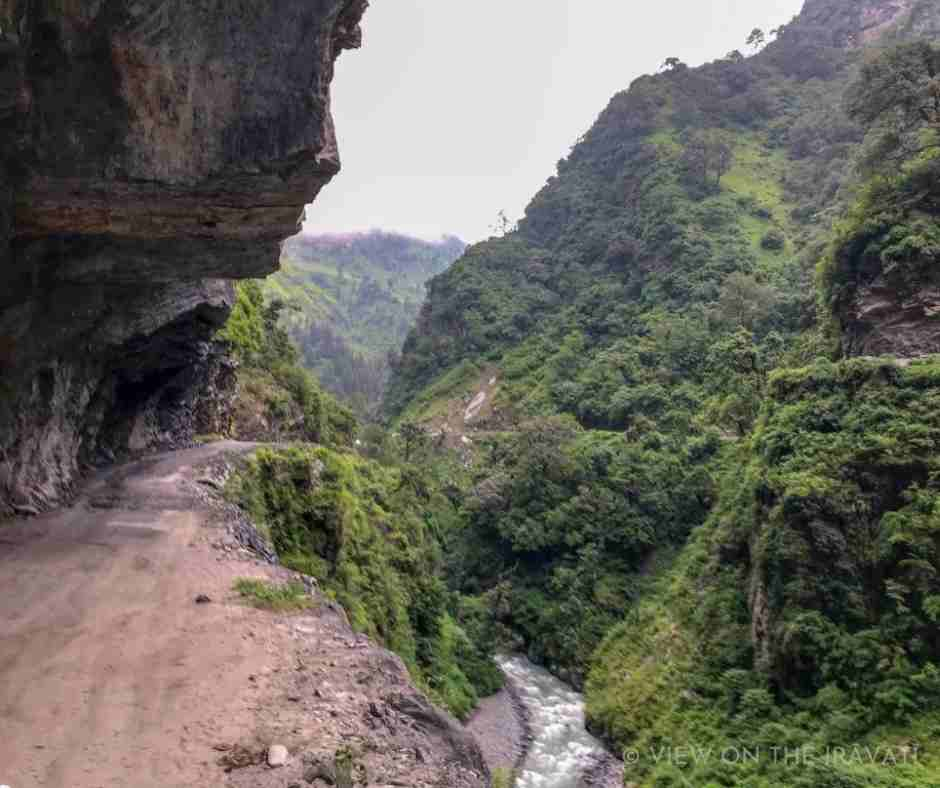
The approach to Khundī Mātā starts from Chanju village. As far as Chambā roads go, the harrowing drive to Chanju is par for the course, but it might be daunting to first-time visitors.
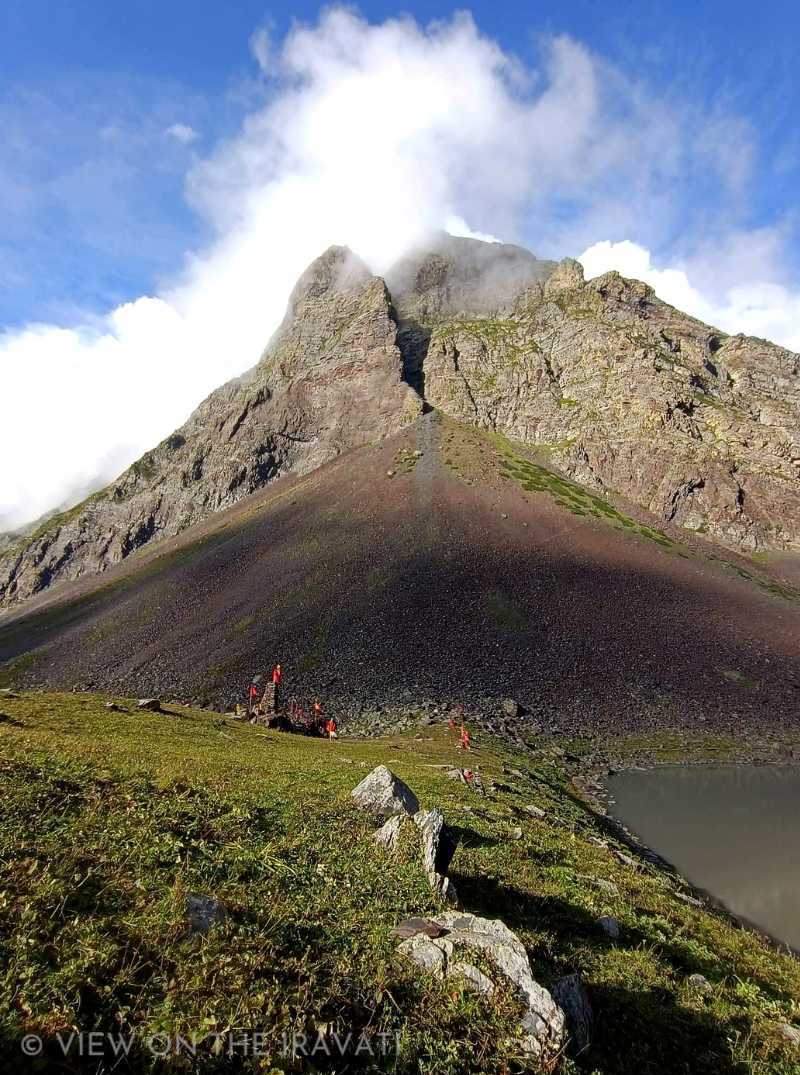
Once we arrived at the lake, lying at the base of a mountain whose top gapes open towards the sky, I had no doubt that this is one of Kālī’s favored abodes.
When reflecting back on the route to get here, it’s hard not to feel that the goddess had a helping hand in ensuring that we made it all the way.
Chanju Village and Kālī/Māralī Mandir
Chanju is about 2,000 meters high in the middle of Chambā. Despite most Khundī Mātā pilgrims being Gaddī, it is not a Gaddī village. There is a local Hindu population as well as Muslim Gujjars who live a rustic life with their buffaloes in the surrounding forests. Part of the architectural allure of Chanju is the presence of flat, sod-roofed homes built into the mountainside.
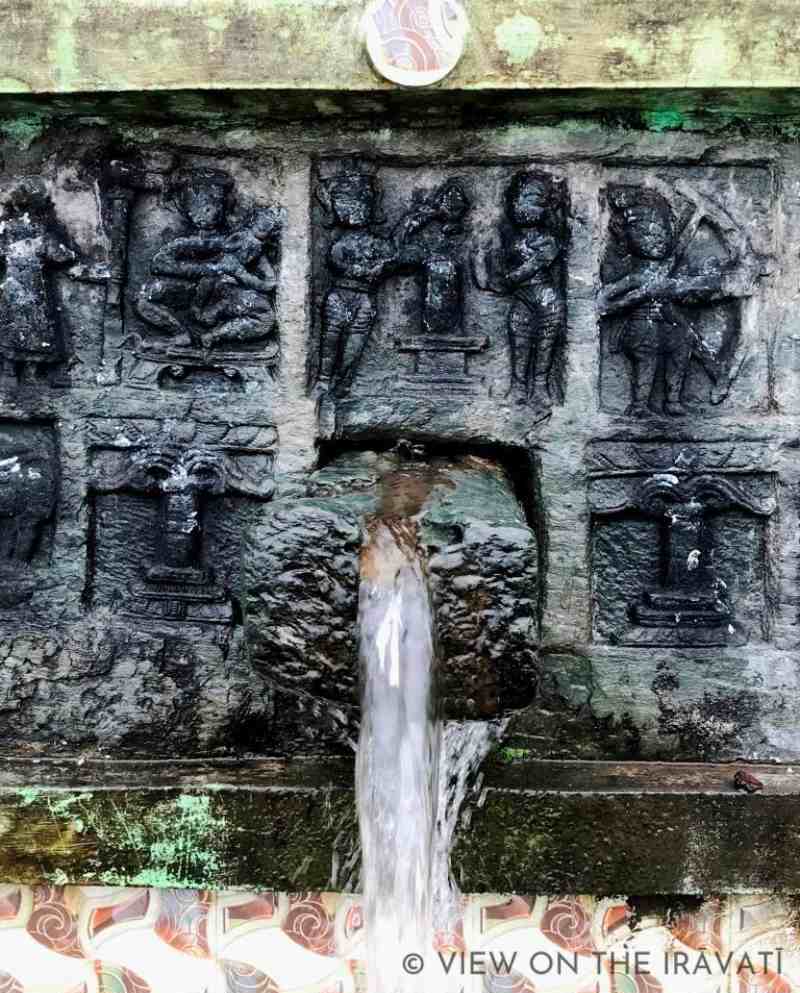
After passing an ancient fountain stone at the entrance of the village, you’ll come to a prominent mandir (temple) dedicated to Kālī, in her local form as Māralī, as well as to Śhiva. In front, there’s a big field and covered area where people can spend their first night and where a langar (community cook out) is prepared for the pilgrims.
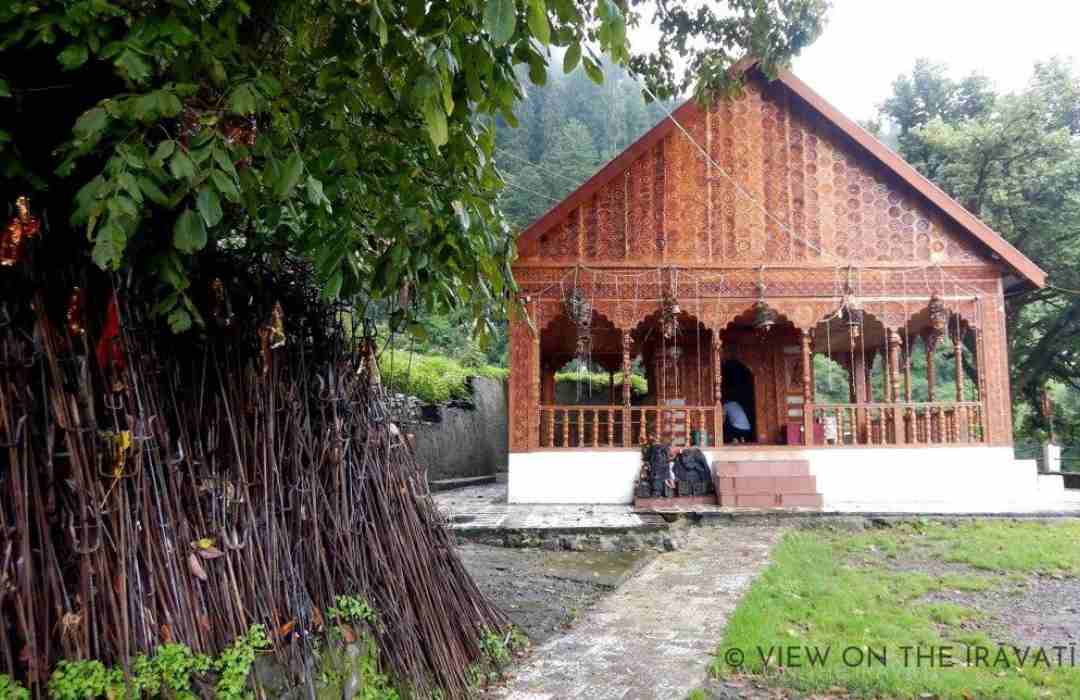
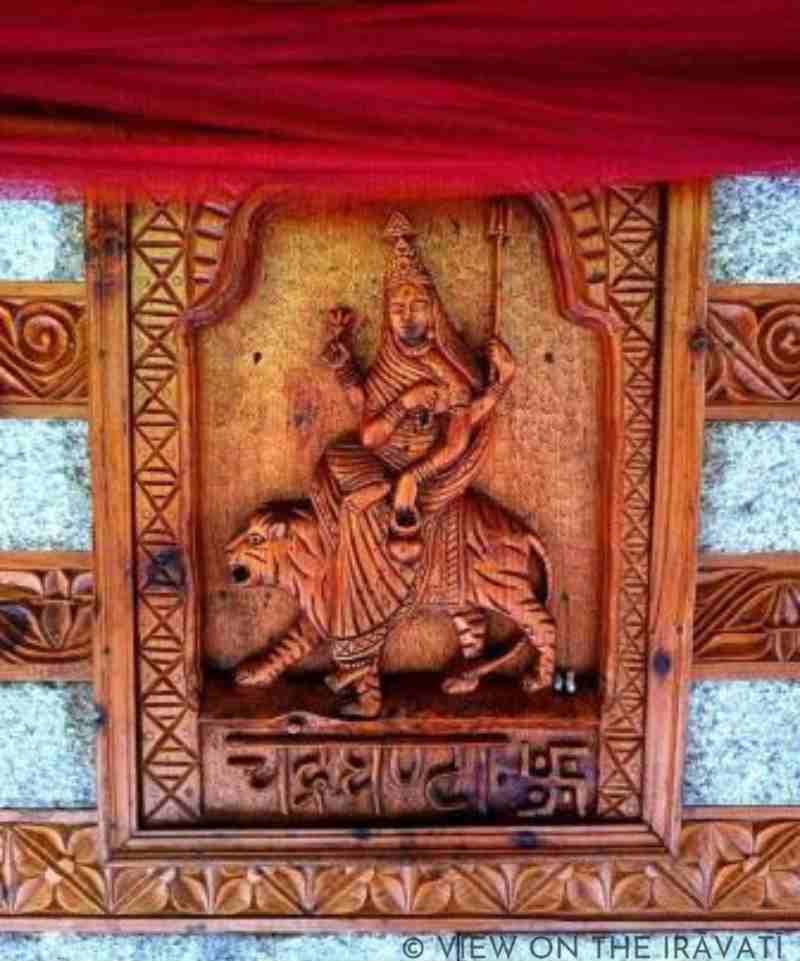
The wooden temple has been recently remodeled and the external walls are covered in wooden panels depicting the nine forms of Durgā worshiped during Navarātri. They are likely modeled on the images made famous by the Gita Press booklet.
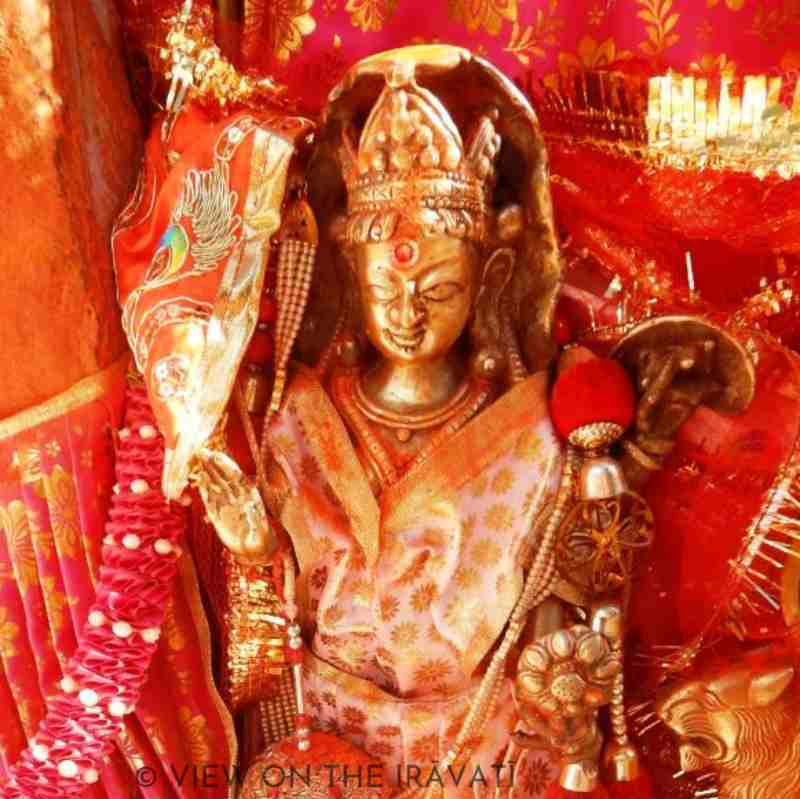
The pujārī we met that day is part of a lineage that has been caring for the temple for over 300 years. He shared a bit about the temple’s history. Once there was an old lady living in the area that grazed her cow nearby. The cow had been dry, but one day she began licking a rock and spontaneously gave milk again. They say the Śhiva liṅga in the temple today is the rock that the cow was licking. The story adds that the old woman received darśana (a vision) of Mātā in a dream, revealing the potent energy of the area to be Kālī herself.
There’s a second story about an 8 year old girl who walked away from Chanju one day towards the lake and never returned. She is regarded as a manifestation of the goddess and the main jātar, with music and chanting, leaves from Chanju to commemorate this auspicious event.
We, however, left Chanju a day early so I only have a clip of the jātar arriving at Khundi Mata.
First Day of Trek: Riyalī
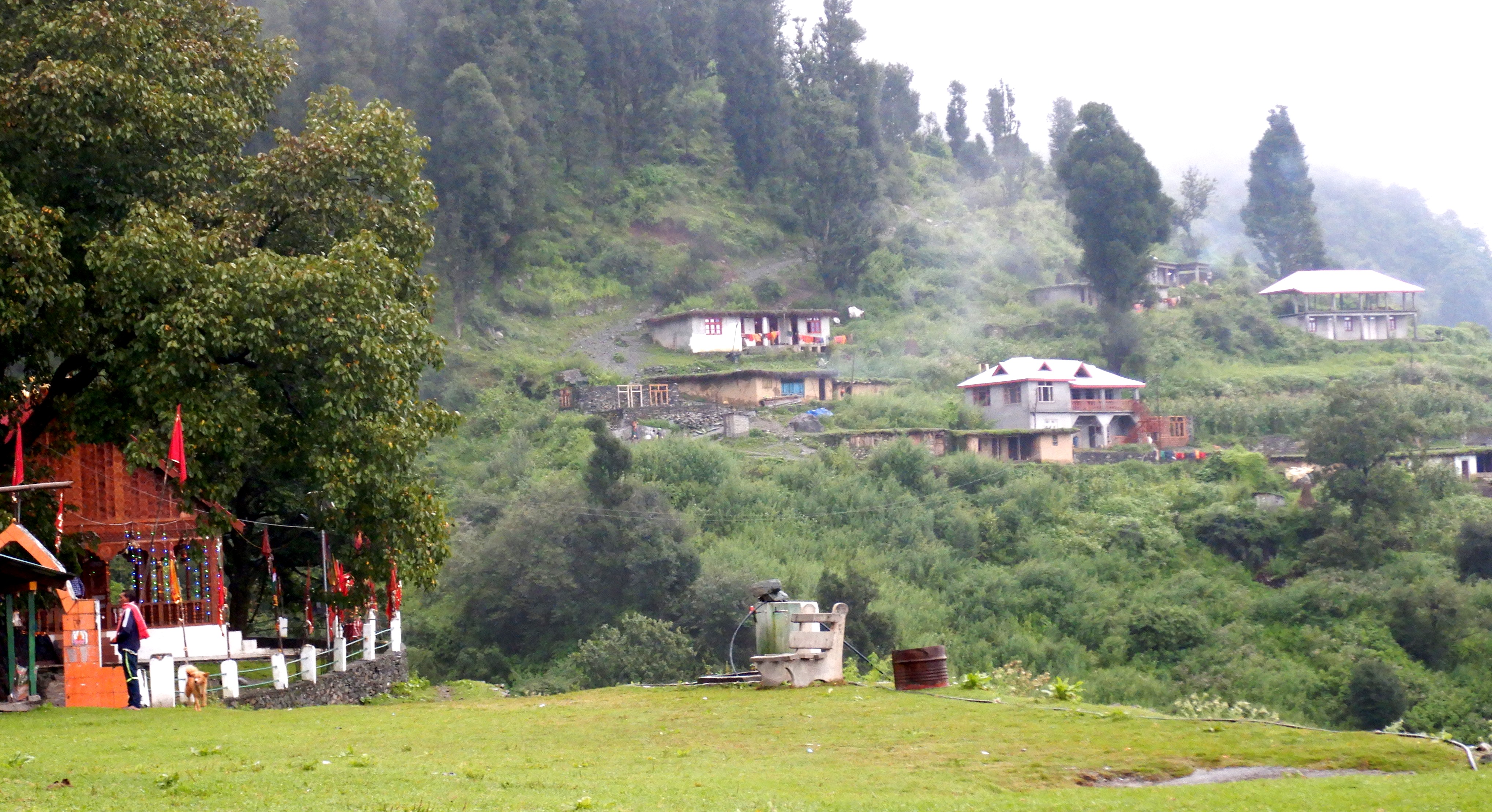
After being charmed in Chanju, the way to Khundī Mātā begins with an ascent into the jungle, past the last few sod-roofed homes in the old part of Dantuin village, where the pujārīs live. A little further into the forest, we could hear the playful voices of children in the completely off-the-grid Gujjar settlements. The trail isn’t marked, but in most places it was easy to keep track of.
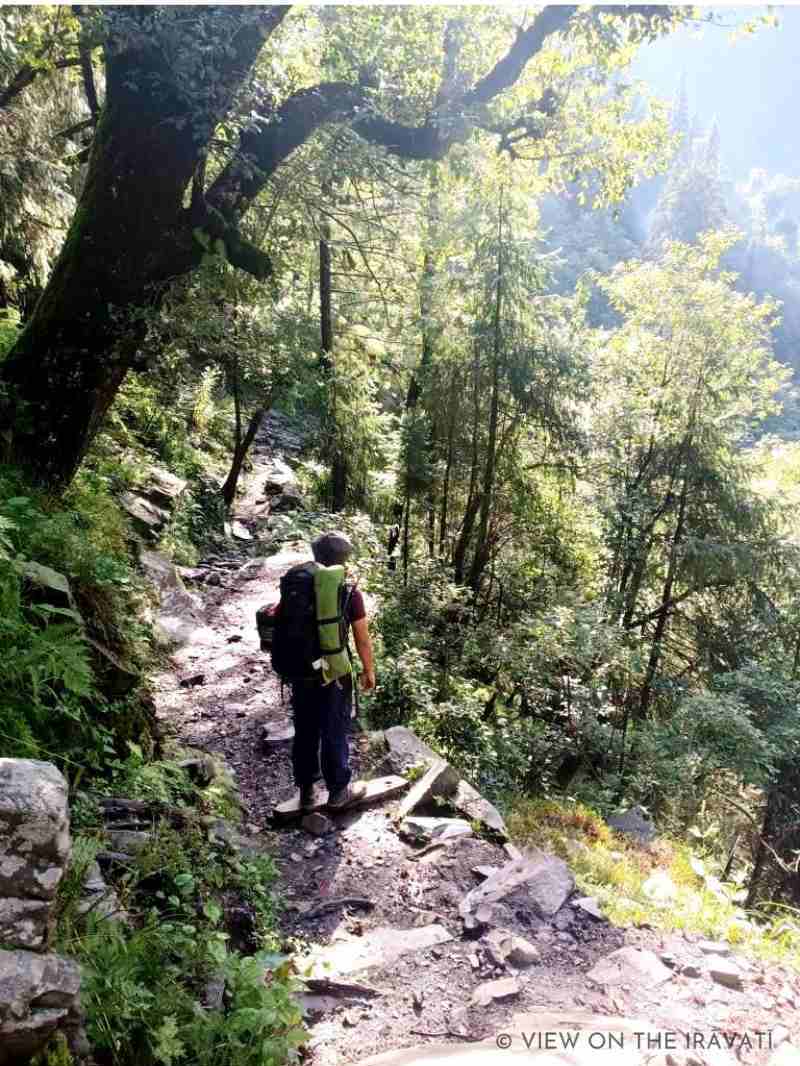
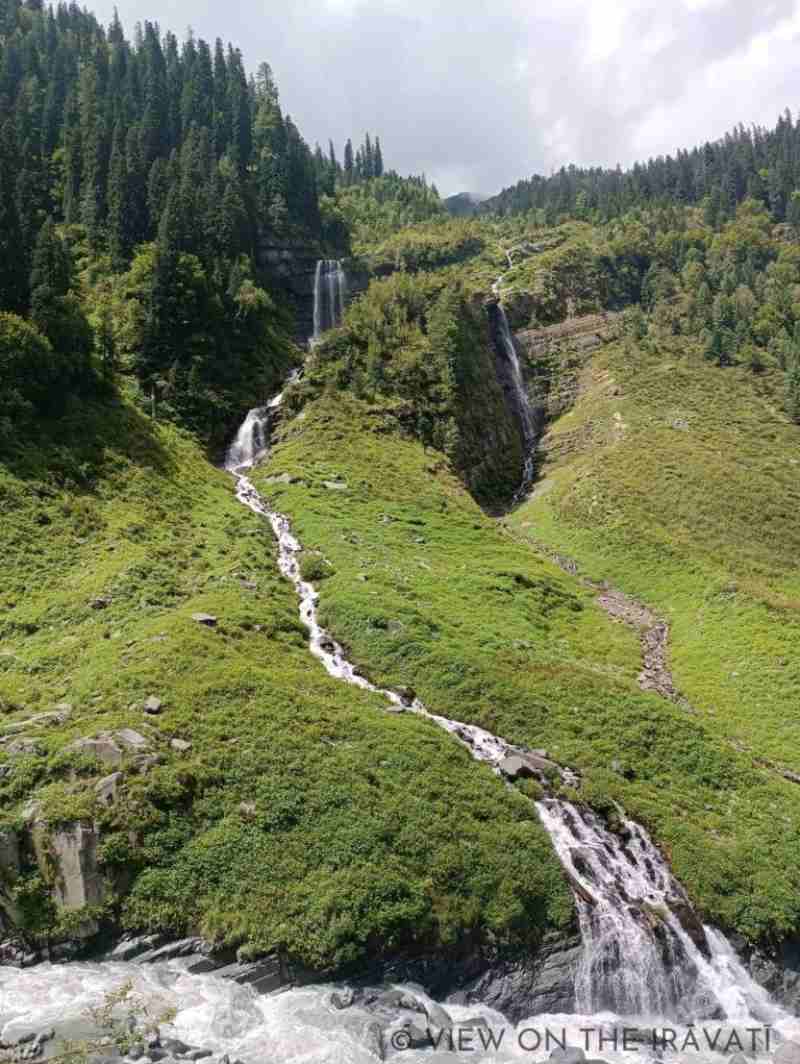
The incline is gradual, with a few stair-like sections that make you pause to catch your breath. There’s a gentleness about the forest which puts you at ease despite the occasional strain. Mixed in with the various kinds of pines, firs, and cedars, you can find the occasional broad leafed chestnut and Himalayan maple. Across the river, I lost count of how many waterfalls we passed.
The river, called Chanju Nallah, stays on your right side for the entire trek to Khundī Mātā. After a four hour hike on the first day, we precariously crossed the confluence of the Chanju and Deothal Nallahs to spend the night at Riyalī. The Deothal Nallah leads to the 4,700 m Darati Pass into Lahaul’s Tindi Valley. This was the only technically challenging part of the hike as the bridge had been washed away.
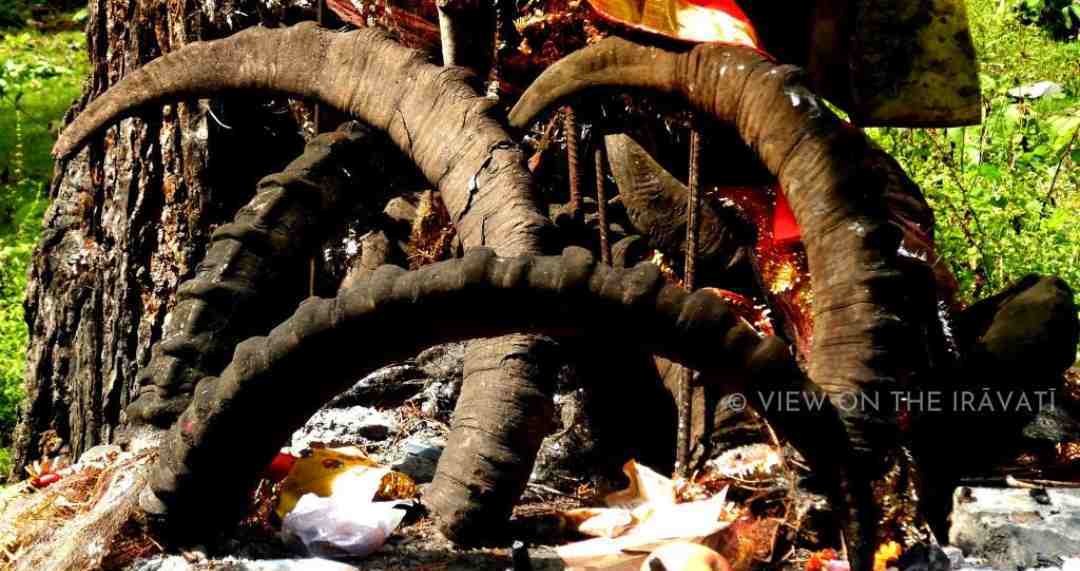
In Riyalī there is a small shrine for the Devī with piled up ibex horns as well as a long wooden dharamshala (rest house) for pilgrims. Several industrious people from Chanju set up temporary tea stalls to provide easy fuel for the path, mostly in the form of the ubiquitous instant noodles of choice, maggi.
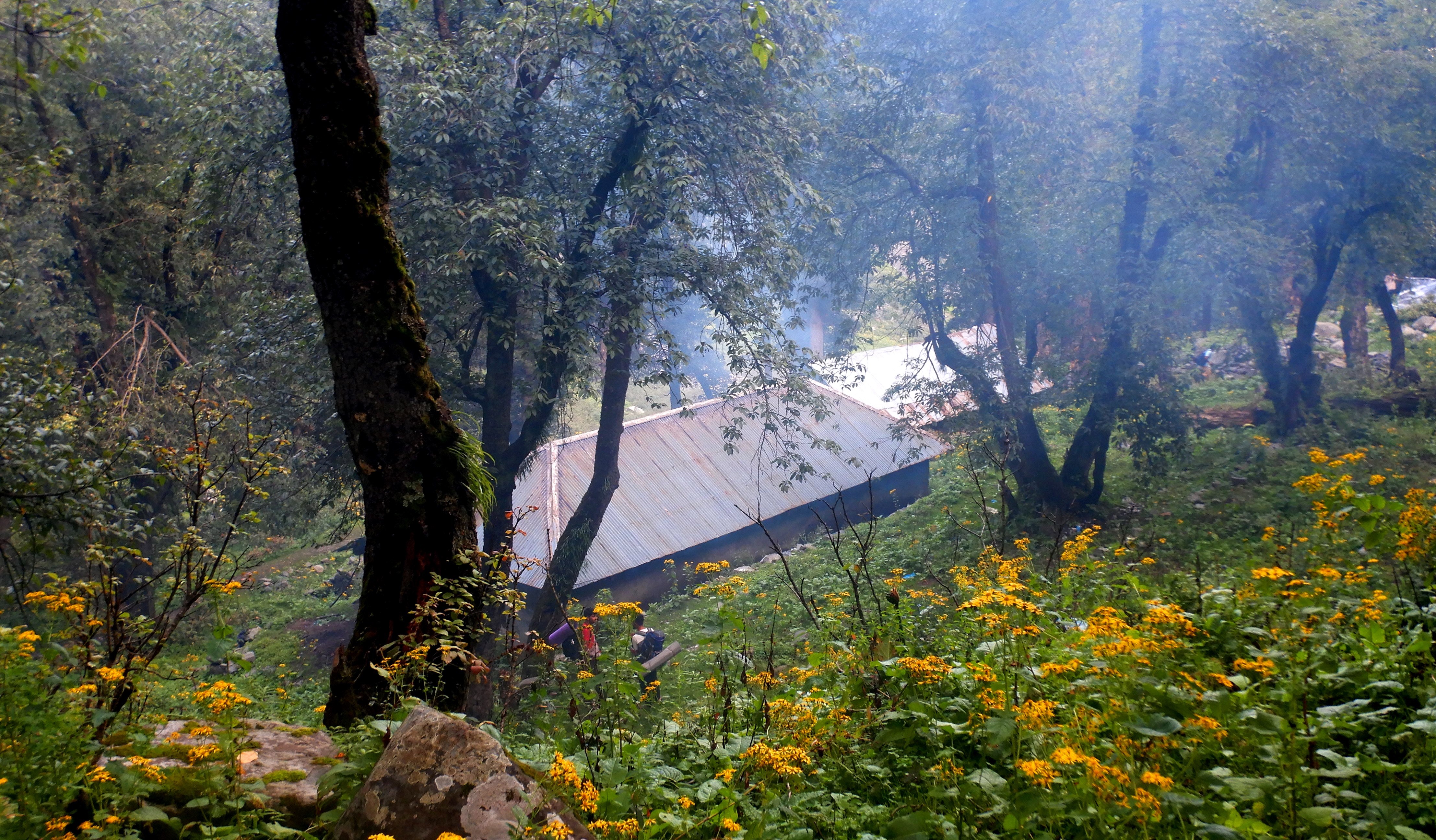
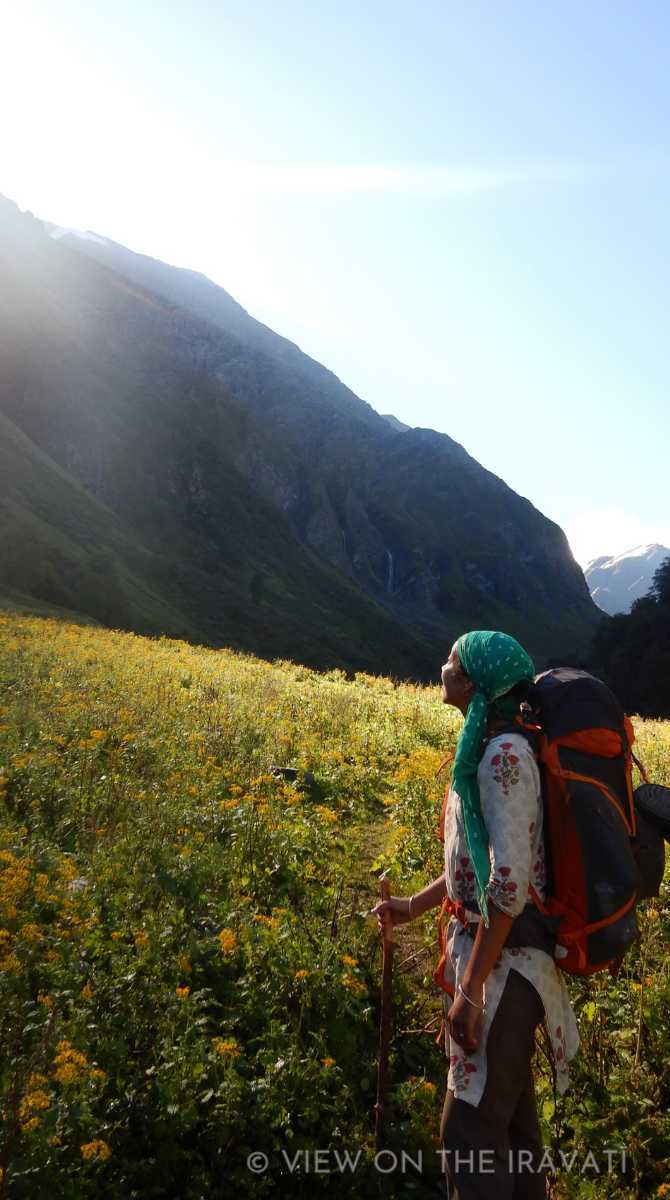
Before the modest meadows of Riyalī filled with pilgrims’ tents, they were thickly covered with bright yellow flowers, adding to the enchantment of this overnight stop.
Second Day of Trek: Khundī Mātā
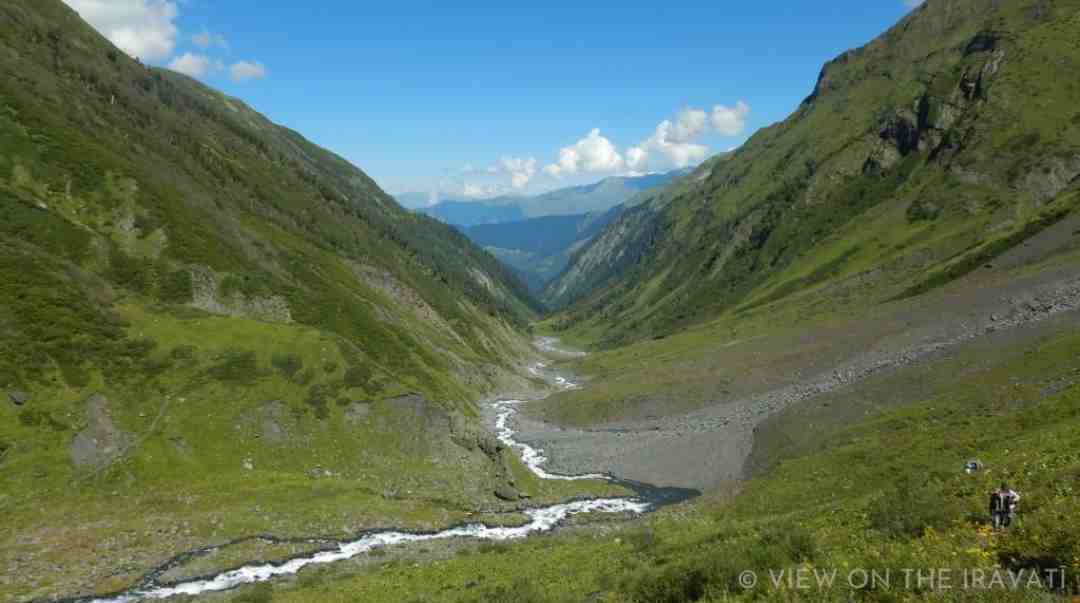
The next day of hiking from Riyalī to Khundī Mātā involves more climbing, but is shorter. We took our sweet time and covered it in about 5 hours, stopping for a belated breakfast of poha near a stream. The dense forest gave way to open fields and steep cliffs with cascading waterfalls soon after Riyalī.
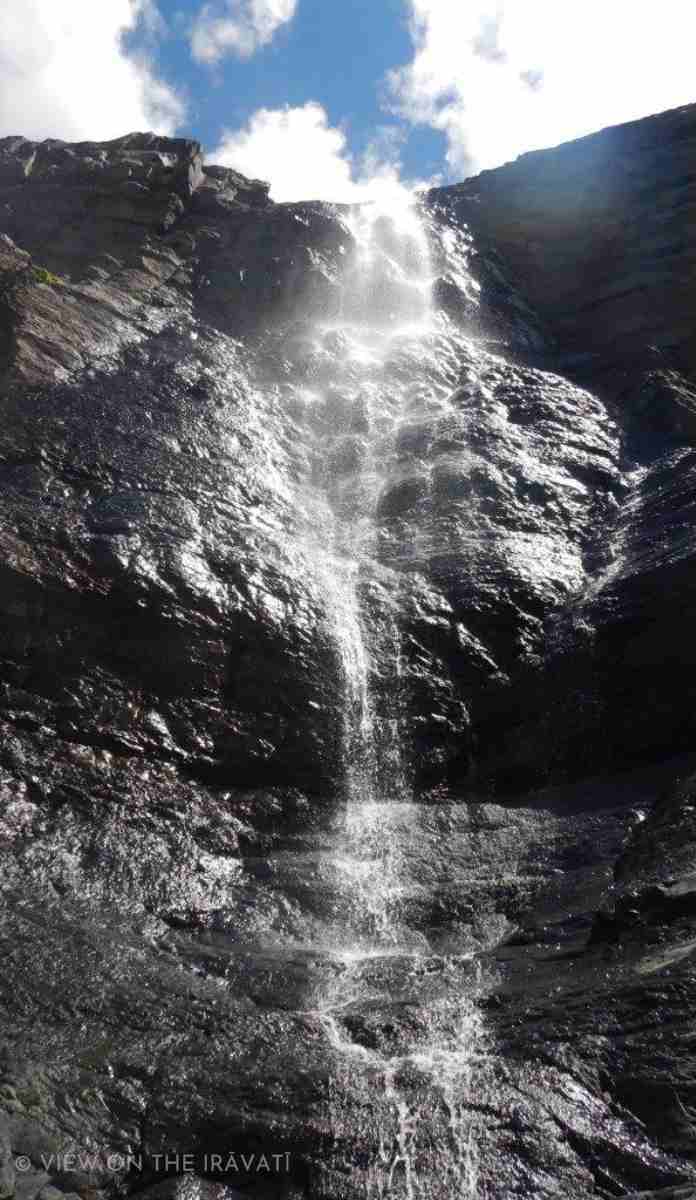
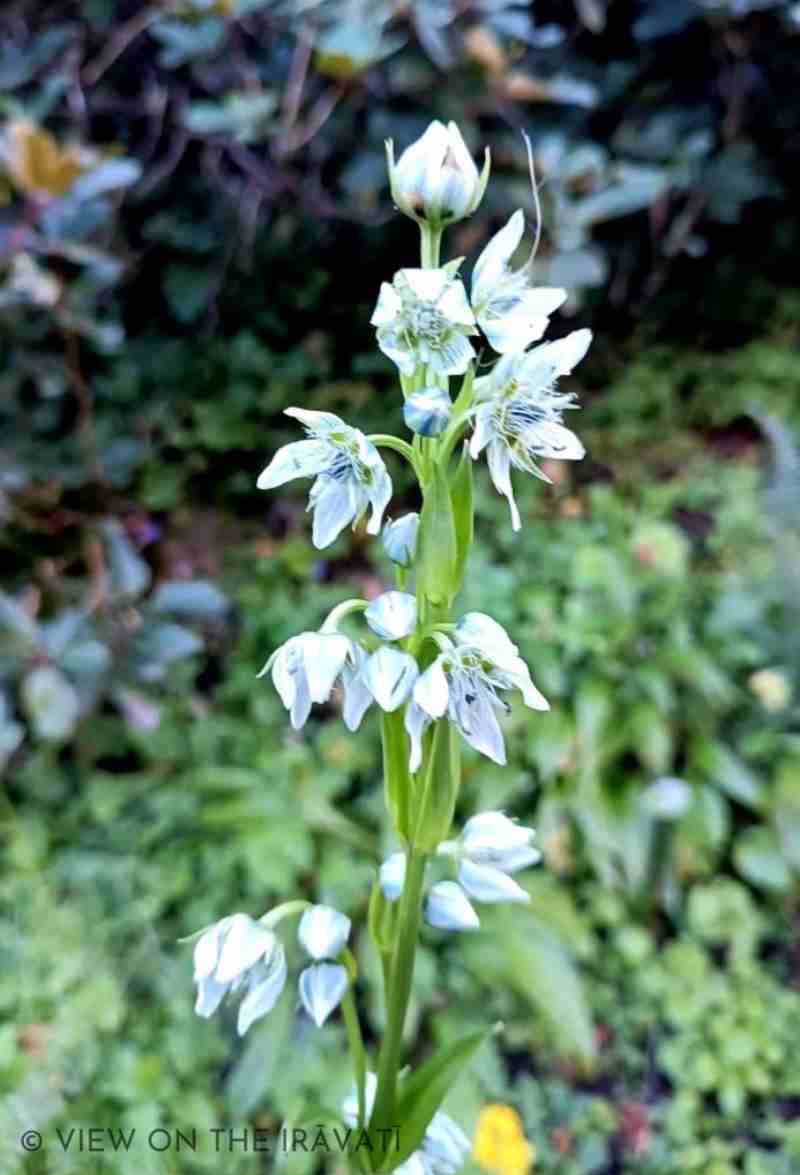
The last stretch of the trail gets narrow in a few places and involves some rock hopping over a big boulder field. Underneath, you can hear the rush of melting glacial water flowing to form Chanju Nallah. Here, as on most treks at this elevation, there are some exceptional wildflowers during the monsoon.
After climbing a steep, spine-like ridge between grass and boulders, you come into a depressed bowl where there’s ample space for pilgrims to pitch tents.
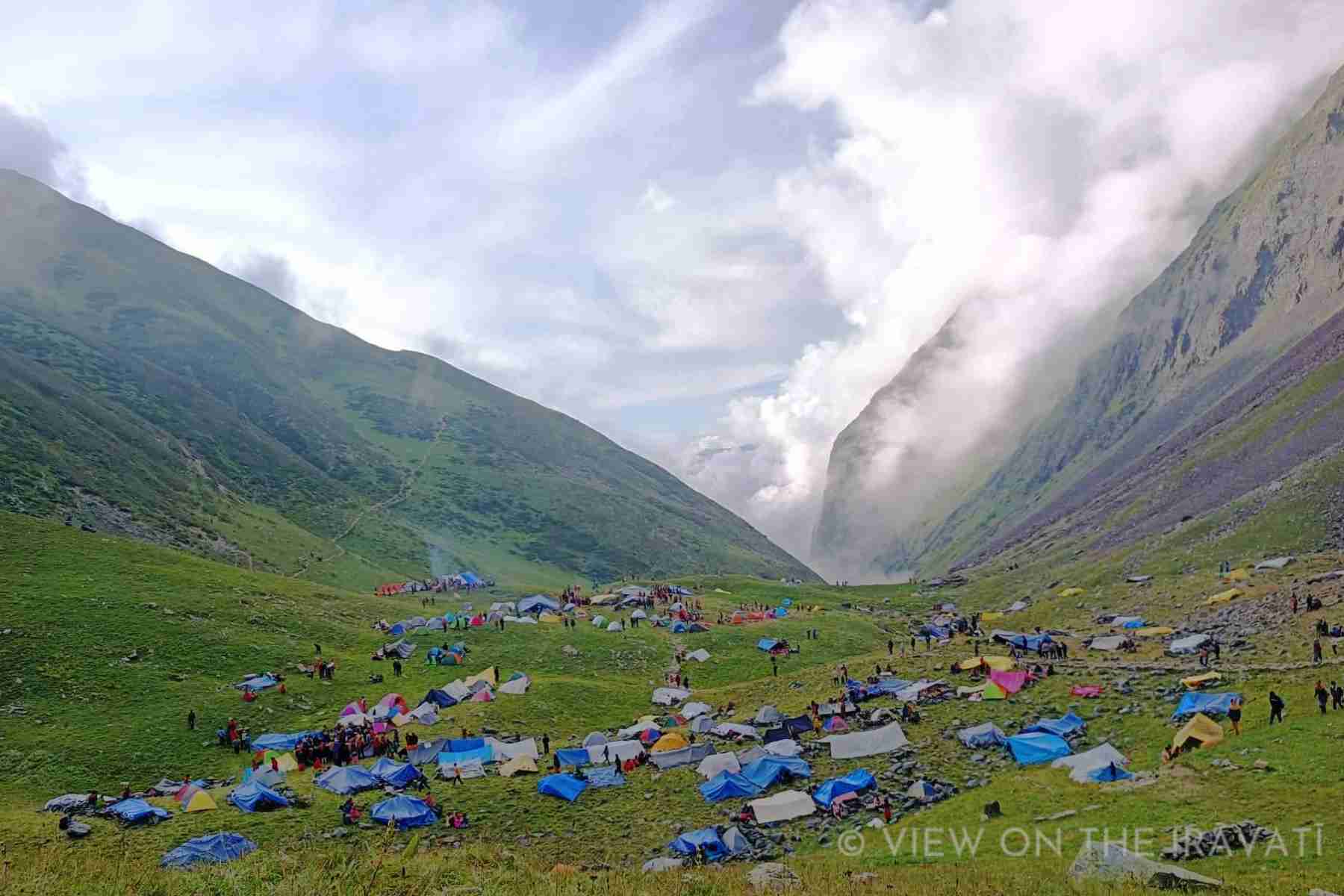
This remote pasture is completely transformed for the pilgrimage. A handful of pilgrims show up the day before, like we did, and camp for up to two nights. The bulk of pilgrims who make the arduous trek from Lihl and Saho only dip into the Khundī Mātā area for one day, opting to return over their respective ridges and spend the night there.
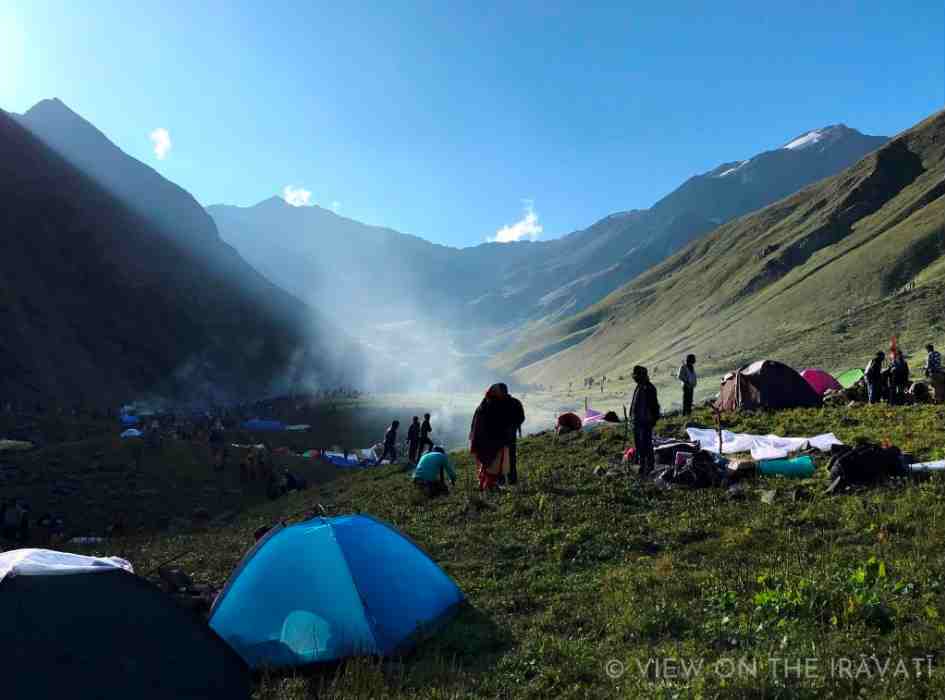
Though we brought our own lightweight MSR stove, food, and utensils, a major convenience of visiting these holy sites during their pilgrimage are the langars. These pop-up cook-outs funded by wealthy devotees, as well as community collections, served exceptional food given the remoteness. At the edge of the camp there was also a long tent café where you could purchase food and chai when the langar volunteers were taking a break.
Lake, Shrine, and Mountain
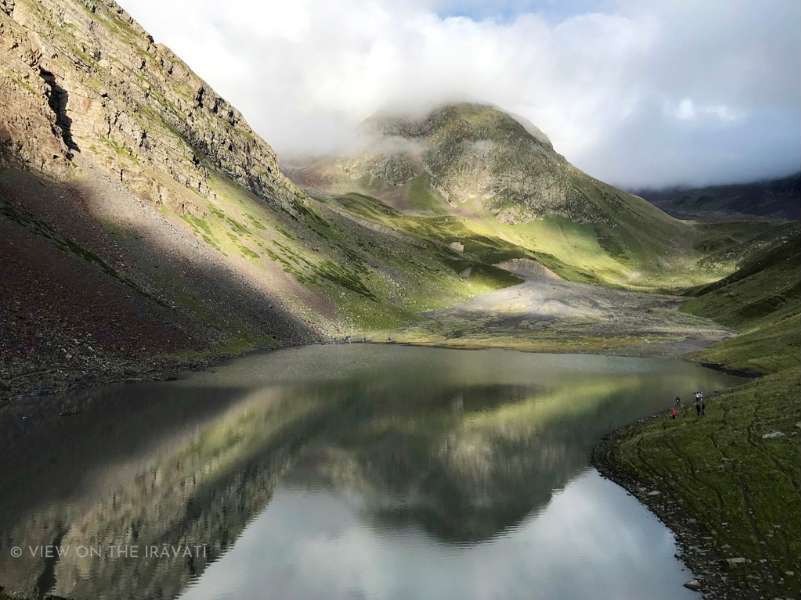
According to the maps, and most people you ask, the primary referent of “Khundī Mātā” is the lake. This fairly shallow glacial lake works wonders with the rarified Himalayan light.
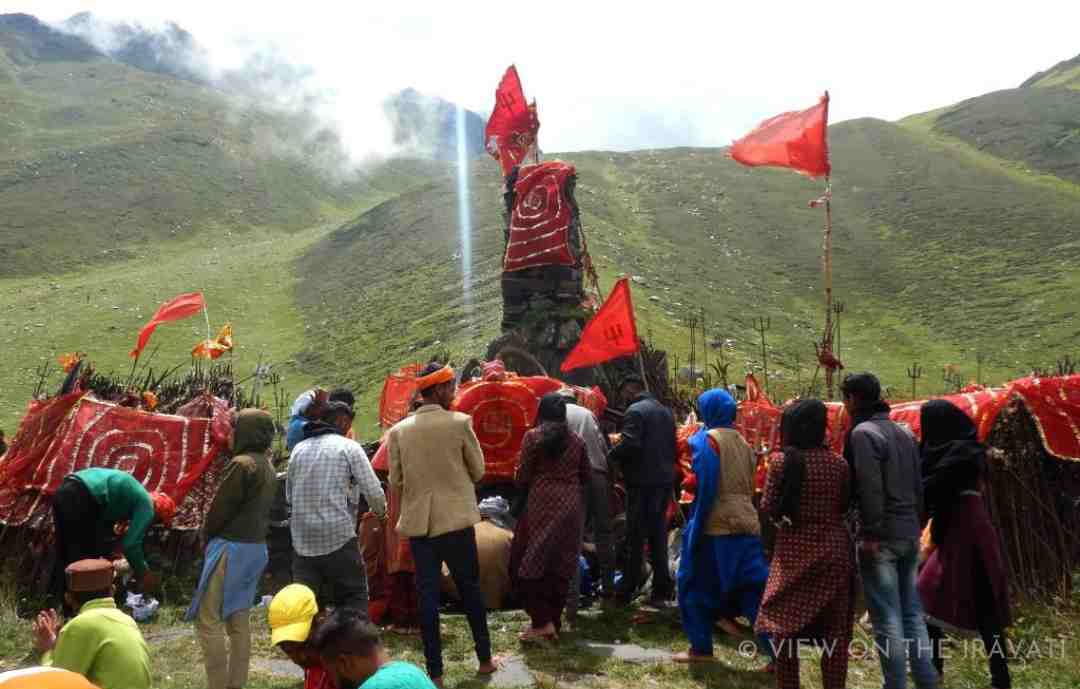
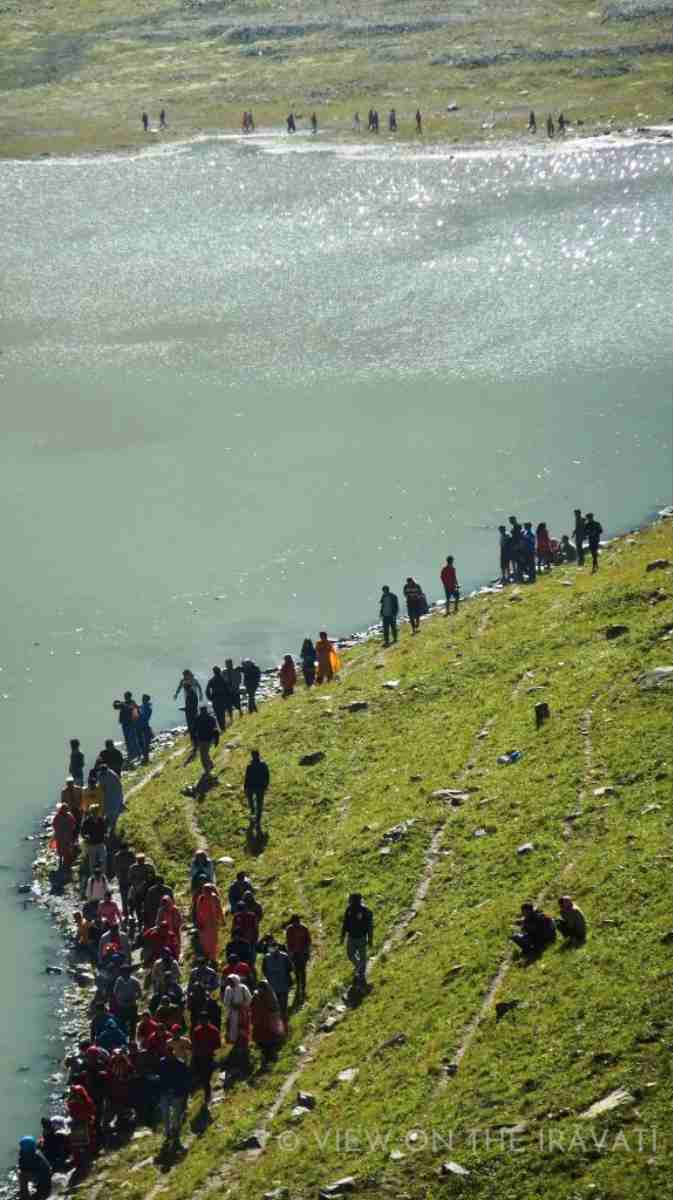
Unlike at Maṇimahesh, no one takes a ceremonial bath in Khundī Mātā Lake with the exception of chelas, the oracular devotees who also fall into trance upon arrival here. The rest of the devotees do a clockwise parikrama (circumambulation) of the lake after making an offering at the shrine.
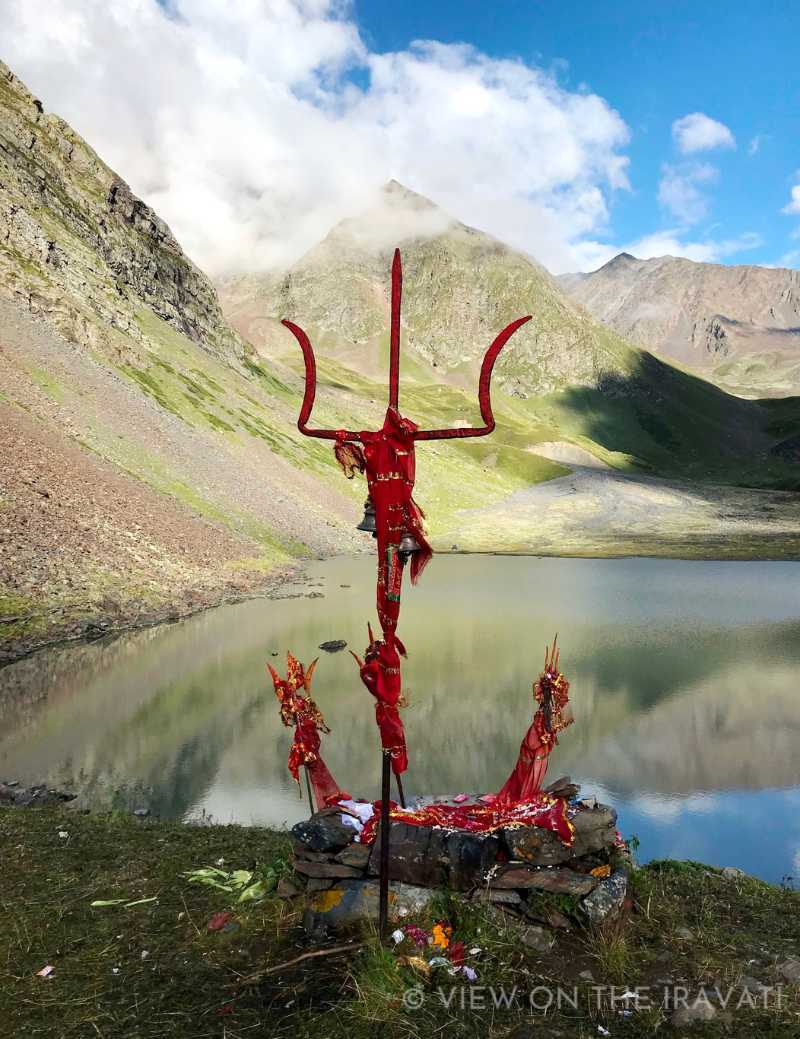
Perched on a ridge which separates the camping area from the lake stands the roughly built stone shrine to Khundī Mātā, cloaked in red ceremonial chunnis (veils).
Several tall crimson flags fly in the wind over the shrine and dozens, if not hundreds, of tridents brought by devotees lean against the stone walls.
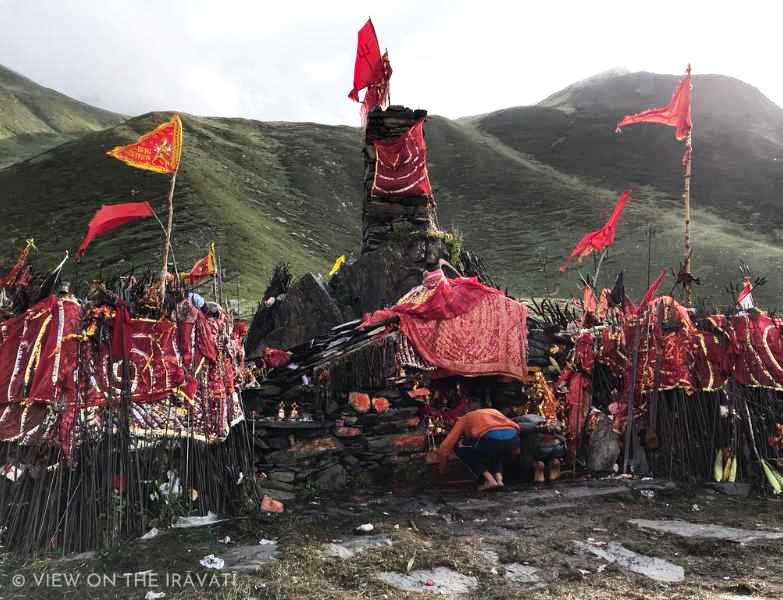
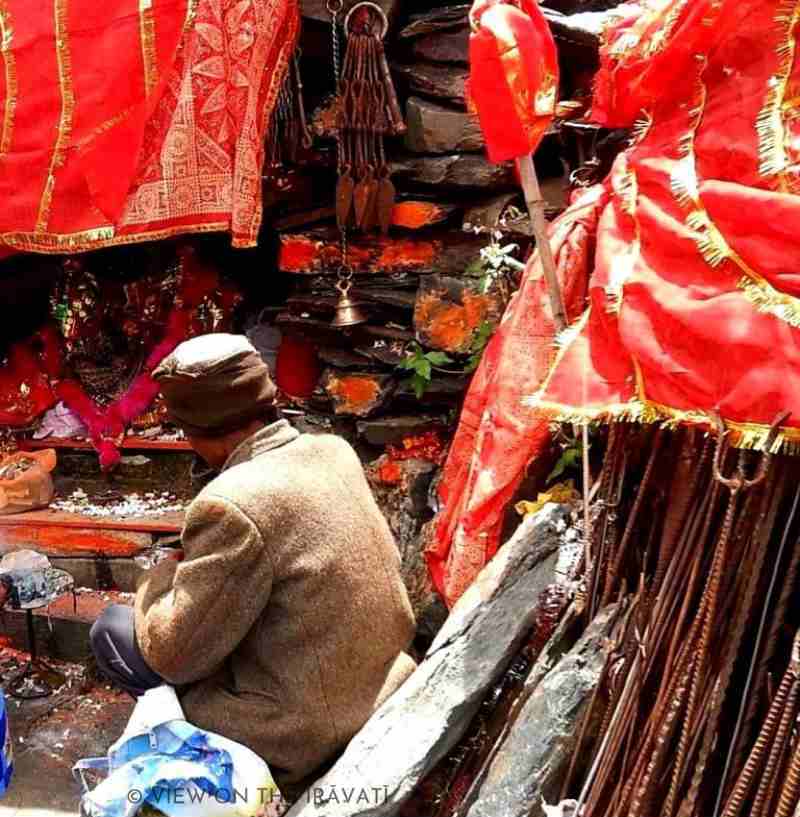
Gaddīs serve as the pujārīs of the shrine during the jātar. Many of the Gaddīs are also here on business, as it were, with their large flocks of sheep and goats. They divide the labor of grazing the animals and sitting at the shrine in shifts. At any given hour, one of the Gaddī pujārīs attends the shrine to facilitate the offerings of the pilgrims.
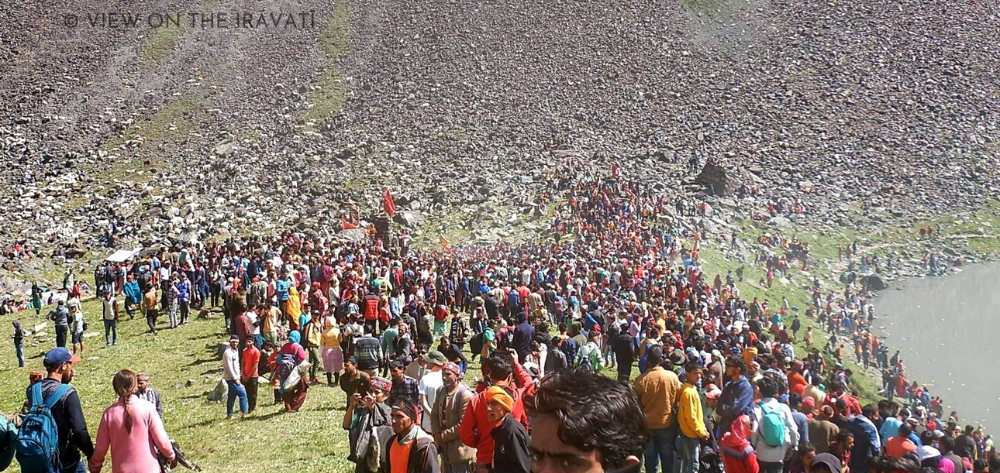
Throughout the first Tuesday of Bhadrapāda, the jātars from Lihl, Saho, and Chanju arrive, bringing waves of energy and enthusiasm as people scream and dance in trance. Elation pervades the wide alpine valley as devotees pour in from all sides.
At a particularly auspicious hour in the afternoon, people gather for the main ritual. Though devotees bring sheep and goats to offer throughout this period, those with the time and patience will wait for this climatic moment to make their offerings.
As dhoop (incense) is lit and a chorus of bells rings, one of the senior Gaddī pujārīs, draped in a red chunni, closes his eyes and waits for Mātā to arrive. His body begins to shake and he soon stands up. People offer him bright orange sindhur which he smears all over his face, as he tells the crowd that the Devī is thirsty.
Out of cultural respect, I won’t go into any more details here and didn’t take any pictures. All I can say is that the presence of something greater than all of us together was palpable.
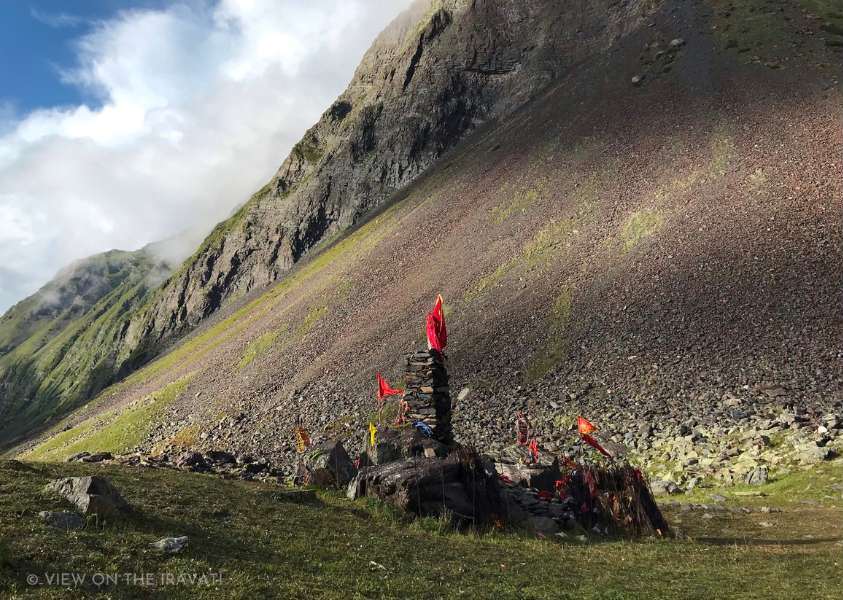
Another looming presence over the whole area, and a feature which struck me as more notable than the lake, is the unique peak which looms over the shrine.
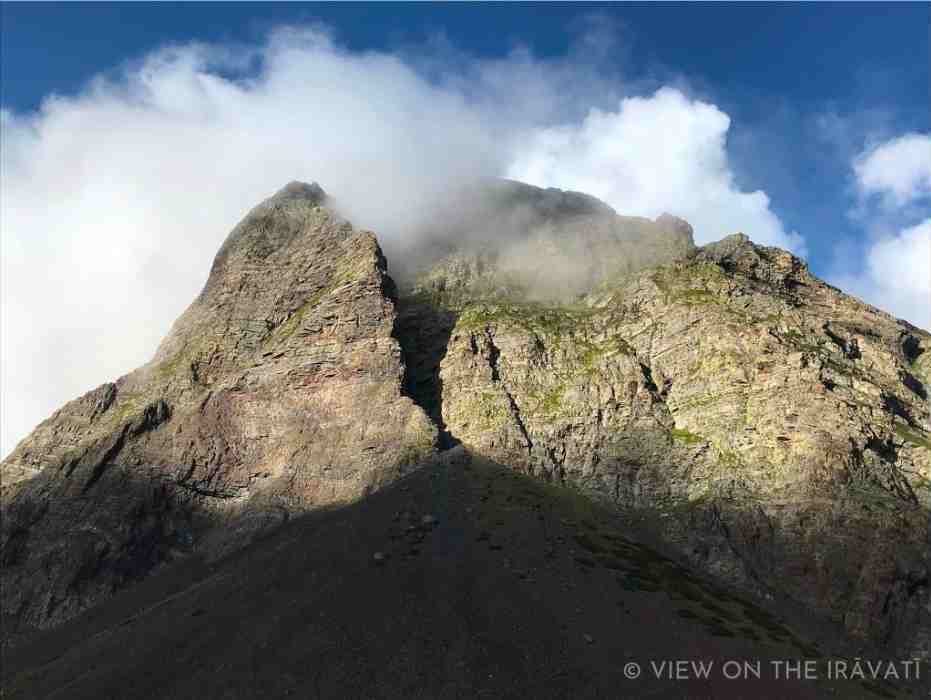
This mountain is split more or less in half and the deep crack forms a chasm from which a cascade of glacier-crushed stone emerges. For me, few monuments could be more evocative of the divine feminine as embodied by Kālī, who eats you up and spits you out.
The Flocks of Khundī Mātā
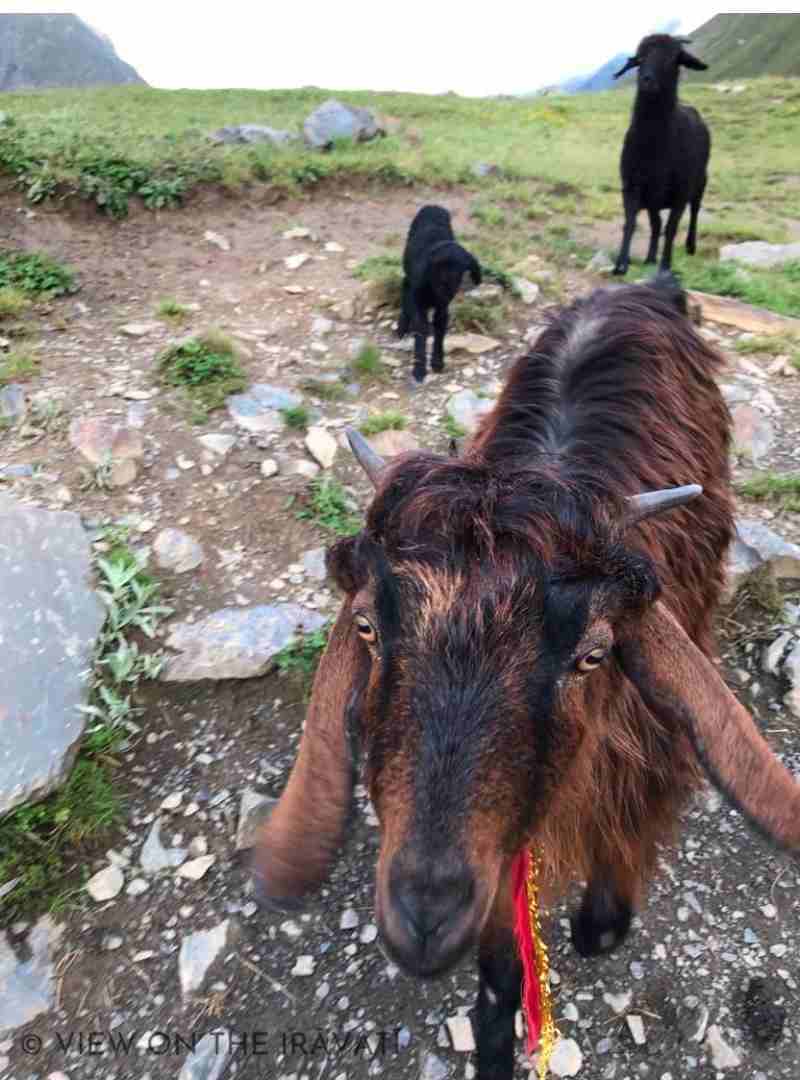
Here I was also reminded of the eternal cycle of food and eaters of food, as eulogized in the Upaniṣads, by the presence of hundreds of roaming ruminants. Some of them were meant for the goddess on this occasion and others were just here for their summer grazing.
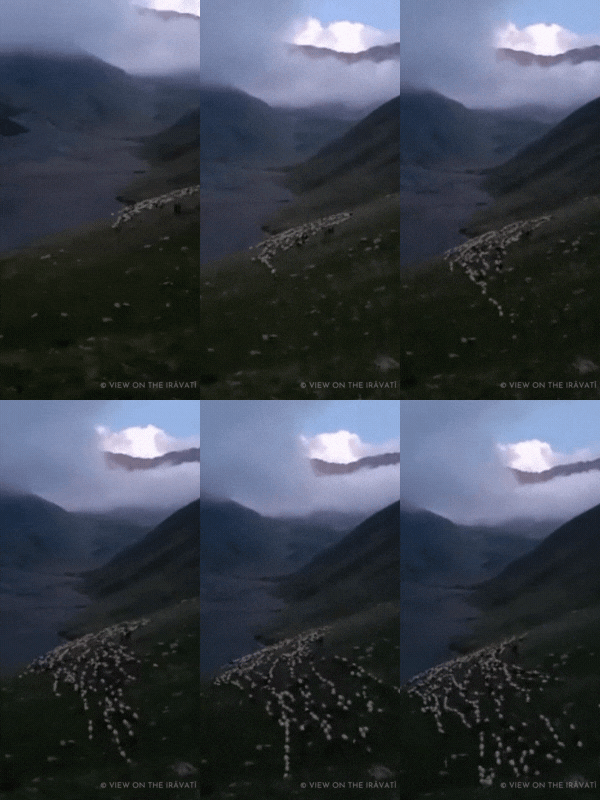
Any Gaddī will tell you that the older goats in the flock know the trails to these pastures well and I can’t help but think they get nostalgic for such a breathtaking buffet of grasses and herbs. My husband made this mesmerizing time-laps of the sheep coming home with their bellies full.
On the night after the main ritual, we sat around a fire with a Gaddī shepherd who was younger than the others and happened to be our neighbor’s brother. In a culture becoming “modern” by fits and starts, a shepherd under 30 is a rarer and rarer sight.
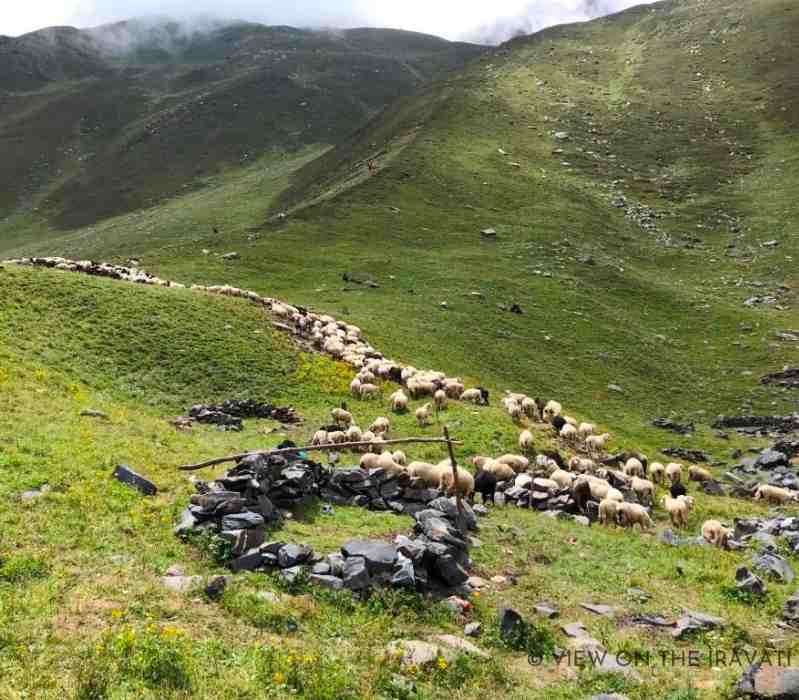
Old stone walls that have served as temporary shelters for generations of Gaddīs dot the bowl-like meadow where we were fortunate to share their company for a few days.
If ever you get the chance, come pay Khundī Mātā a visit and see for yourself how the elements mingle and create a truly divine environs.
How to Get to Khundī Mātā
Four different trekking routes lead to Khundī Mātā: via Chanju (yellow), via Saho (red), via Lihl/Bhej (purple), via Chaurasi Challi (green).
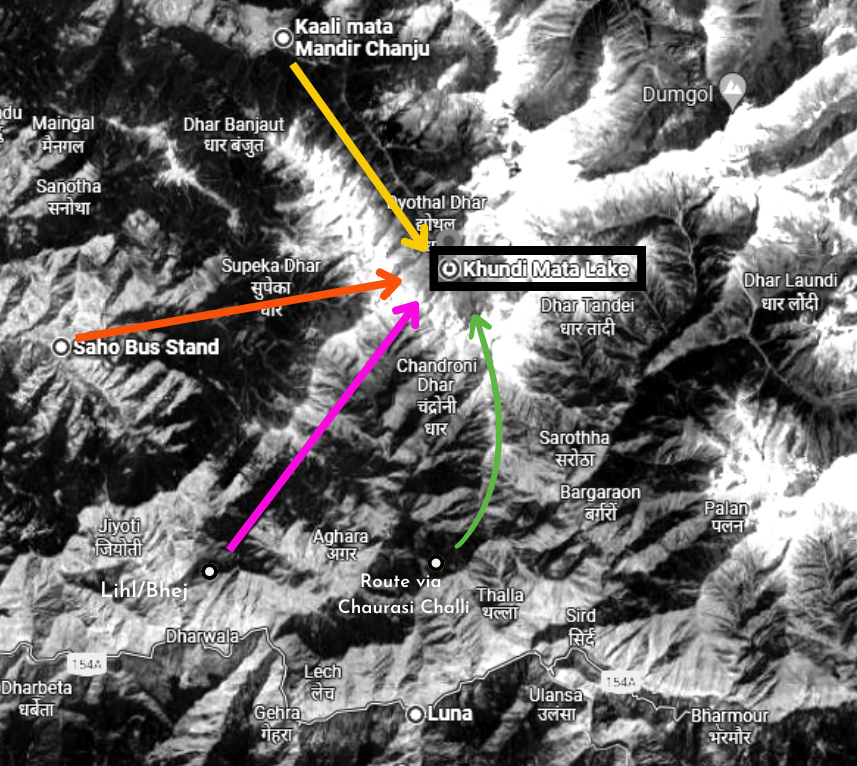
- Chanju – [via Koti on Tissa-Pathankot Road]
- You can get to Chanju via a local bus or taxi from Nakāroḍ, a town on the way to Tissa, both take 1-2 hours from Nakāroḍ (appx. 31 km trip).
- This is the route we took, described above, and doesn’t cover any mountain passes.
- If done in one stretch with minimal breaks this trek can be done within 8 hours of hiking on one day and covers about 9 km. Anyone relatively fit could come via this route.
- Being laid back, we broke it up over two days:
- 5 km from Chanju to Riyalī
- 4 km Riyalī to Khundī Mātā
- Saho – [via Chambā]
- This is a popular route for villagers from the area behind Chambā. It is a pass trek with some steep and technical sections.
- Lilh/Bhelj – [via NH 154 A between Chambā and Bharmour]
- Similar to the Saho route, this is also used by villagers in one of the smaller valleys near Bharmour and goes over a pass. You can get to Saho via Dharwala village.
- Chaurasi challi [via NH 154 A between Chambā and Bharmour]
- This is perhaps the most arduous and least used route which passes by the remote Thalla village. It is reserved mainly for Gaddīs coming from Bharmour and Lunā with their flocks and gets its name from the 84 streams or water sources which make it a convenient route for brining live animals.
- There’s a legend that the Pāṇdavas had a puja for the chaurasi (84) siddhas (spiritual adepts) and that there was no water, so Bhīma made 84 springs for the siddhas here.
These are rough indications of the routes and all of them are informally maintained, meaning they could suddenly become non-existent during the peak of the monsoon.
It is advisable to do this trek during the main pilgrimage season in August, or seek out a trusted trekking agency if you would like to do it some other time. Beware that there are bears and other wild animals in the surrounding forests.
The closest train station to Khundī Mātā is in Pathankot and the closest airport is the Kangra-Gaggal Airport, about 200 km away.
Since Chanju is the most popular route, here are some basic distances and approximate travel times from the major nearby towns.
Chambā to Chanju via Nakāroḍ: 85 km (4-5 hours)
Dalhousie to Chanju via Nakāroḍ: 115 km (5-6 hours)
Pathankot to Chanju via Nakāroḍ: 180 km (6-7 hours)
|| जय माता दी ||


 View on the IRĀVATĪ
Leave a comment